
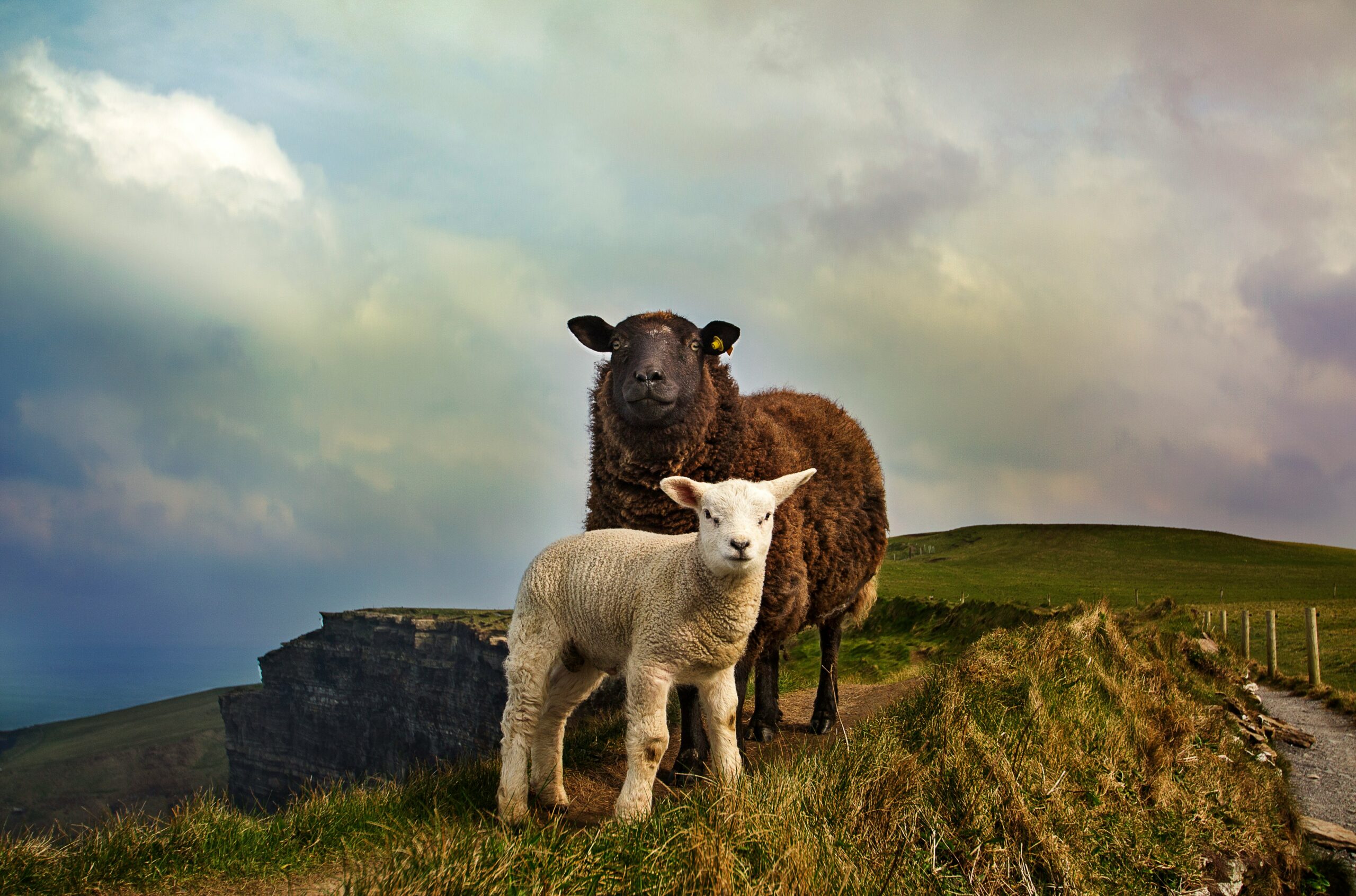
The Irish people have been animalized and racialized by outside invaders and colonizers for hundreds of years. In my article for the Journal of Sociology, I argue that this painful history informs contemporary narratives regarding human-nonhuman relationships, food production and diet, and national identity. Today, Ireland continues to be a major global producer of meat and dairy, despite high environmental costs and the obvious affront to nonhuman autonomy.
Because colonialism so frequently entails the imposition and expansion of animal-based industries and because the ability to consume animal products is a marker of wealth, it is not uncommon for newly independent nations to double-down on animal exploitation as is clearly the case in Ireland. But this animal-based food system is a direct result of British frameworks installed under colonialism. Despite efforts of the Celtic Revivalists in the 19th and 20th centuries to redeem the colonial subject, a decidedly more humane and greener indigenous Irishness has been lost admist Ireland’s effort to “humanize” itself as a leading animal producer in the world capitalist system.
It is all too easy for historians to rely on the cultural lens of the present to interpret the past. Stereotypes of Irish cuisine as especially laden with animal products is only one such contemporary bias. The developed world in general now consumes considerably more animal products than only a half a century prior. This has been made possible by the industrialization of food production and the exploitation of weakened postcolonial spaces like Ireland, but also heavy subsidies from nation-states and governing bodies like the European Union. The folk memory of the horrific series of famines that plagued Ireland under British colonialism has been a wellspring of nationalistic resistance, and farmers have been uplifted as heroic saviors. This history is shown to prevent constructive dialogue regarding contemporary food-related social crises. The colonial attempt to frame Irish humans as apes, pigs, or sub-human evolutionary links to the animal world, it is argued, further inform resistance to plant-based initiatives that are growing more prevalent across the Republic and Northern Ireland.
This study applies a vegan media discourse analysis to the efforts of Go Vegan World, Ireland’s most prominent vegan charity. Go Vegan World began campaigning with bus posters, billboards, television debates, newspaper ads, and more from approximately 2017. This sparked nation-wide response. This discourse, as it appeared in radio, television, and online forums, was analyzed to ascertain the degree to which Ireland’s colonial legacy might inform the campaign’s resonance. Results indicate that appeals to an Irish “nation” as distinct and superior to the rest of the world shape resistance to vegan campaigning, while the authenticity of Irish humanity seems to bank on animal oppression.
As a vegan sociologist, I apply a critical race and critical animal studies perspective, arguing that constructions of race and species in the colonial context are fundamental to contemporary narratives and decisionmaking with regard to animal agriculture and sustainability. Although more sustainable, healthy, and equitable traditions can be found in Irish culture, it is primarily the influence of colonial-capitalist rule that shapes modern Ireland’s foodways and policymaking.
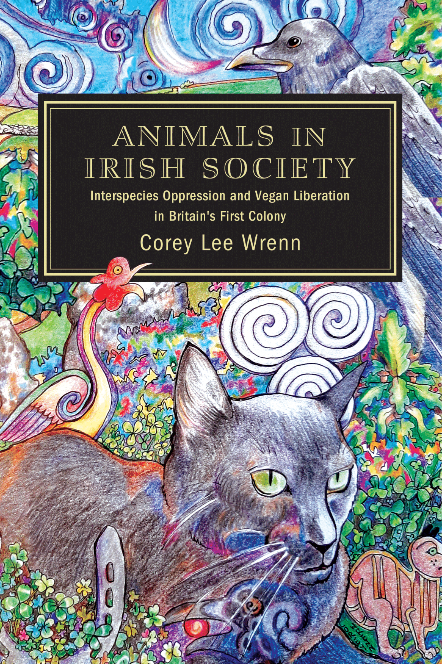
Readers can learn more about Irish vegan studies in my 2021 publication, Animals in Irish Society: Interspecies Oppression and Vegan Liberation in Britain’s First Colony.
Receive research updates straight to your inbox by subscribing to my newsletter.
