
Are we losing our vegan restaurants? Is this the death of veganism?
As someone who has been vegan for twenty-five years, I have seen the rise and fall of vegan restaurants firsthand. In the early 2000s, I made pilgrimages to places like Red Bamboo (recently closed) and the legendary NY Dosas in Washington Square Park (still going strong!) in New York City. Sticky Fingers (also recently closed) in Washington D.C. was another unmissable destination. These restaurants mattered. They offered something that simply could not be found elsewhere. If you wanted an elaborate vegan meal or decadent treat, your choices were to cook it yourself or travel to one of the few cities where dedicated vegan businesses existed. Vegan restaurants were destinations in their own right.
The recent wave of vegan restaurant closures has prompted a great deal of discussion in the United States and United Kingdom, usually involving some grim prediction of veganism’s demise. However, the story is inseparable from broader changes in the hospitality sector. Sharp increases in taxation and operating costs have placed enormous pressure on restaurants and pubs alike, leading to thousands of closures that have little to do with the menu. The rise of food delivery platforms has further eroded restaurant profitability, while supermarkets now offer an unprecedented range of affordable vegan products that were unimaginable only a generation ago.
But recent closures reflect more than economic pressures. They point to a profound shift in both culture and marketplace conditions. Veganism has increasingly been commodified as a consumer lifestyle, absorbed into mainstream retail and hospitality. Most chain restaurants and omnivorous establishments now offer at least one vegan option, but these additions often feel more like exercises in market retention than genuine culinary innovation. The ubiquitous falafel wrap or garden burger persist, not from a commitment to veganism, but to prevent losing an entire party of diners over one or two with dietary requirements.
Such offerings can also function as a form of greenwashing, allowing businesses built upon Nonhuman Animal exploitation to present themselves as environmentally conscious or socially progressive without meaningfully changing their practices. As I uncover in my research on veganism in the United Kingdom, the mainstreaming of vegan consumption has often come at the expense of its more radical political dimensions.
The co-optation of veganism has implications that extend beyond food. Historically, vegan restaurants were never merely places to eat. They were spaces of resistance. They served as meeting places for activists, incubators for social movements, and safe spaces for marginalized communities. The recent closure of Bloodroot in Connecticut after fifty years is a poignant example. Bloodroot was never simply a vegetarian and vegan restaurant. It was a feminist institution, a lesbian gathering space, and a community hub committed to making not just good food available, but just food affordable. Its legacy reminds us that these spaces fulfilled political and cultural functions that cannot be measured in profit margins alone.
For many vegans living outside major cities, these restaurants inspired local efforts to recreate that sense of community. Growing up in a rural area, vegan potlucks were often the vegan equivalent of dining out. They were opportunities to share recipes, taste unfamiliar foods, meet other vegans, and build relationships that often translated into activism. Potlucks, like vegan cafés, were infrastructures of social movement building.
Those gatherings seem far less common today. Instead, community increasingly forms around grassroots meetups at restaurants hosting temporary vegan menus, while online spaces have become central to vegan culture. The explosion of vegan YouTube channels, social media influencers, and high-quality cookbooks has transformed access to recipes and culinary knowledge. Fifteen or twenty years ago, these resources scarcely existed. Today, it is easier than ever to learn sophisticated vegan cooking from home, reducing some of the practical need for dedicated vegan restaurants while simultaneously shifting vegan culture toward individualized consumption rather than collective participation.
This evolution raises important questions about what has been gained and what has been lost. Mainstream availability has undoubtedly made veganism more accessible. It is far easier to eat vegan while travelling, shopping, or socializing than it was twenty-five years ago. Yet accessibility has coincided with the erosion of many of the physical spaces where vegan identity, solidarity, and political organizing once flourished.
Looking ahead, the future of vegan restaurants may depend less on consumer trends than on broader political and economic developments. As climate change accelerates and healthcare systems struggle with the enormous costs associated with animal-based food production and consumption, governments will eventually adopt policies that reverse the outsourced environmental and public health consequences of animal products. Such measures could create conditions for a resurgence of dedicated vegan businesses.
At the same time, the contemporary conservative backlash against environmentalism, feminism, and social justice has increasingly politicized even everyday consumption. In that context, all-vegan restaurants may once again become visible sites of resistance rather than simply dining options. Businesses such as Lagusta’s Luscious in New York demonstrate that this tradition is already being revived, embracing veganism not merely as a cuisine but as a form of ethical and political engagement.
Perhaps the disappearance of vegan restaurants is not simply a story of market failure. Rather, it denotes the end of a turn-of-the-century era of a still rather infantile vegan movement struggling to offer ethical plant-based fare in a deeply animal-based culture. It also denotes the uncertain beginning of another era of increased vegan visibility under capitalism’s threat of cooptation. The challenge for the movement is not merely to preserve vegan businesses, but to preserve the communities, solidarities, and political imagination that those spaces once made possible. Eating vegan in the public space has been an important, everyday expression of the world we strive to see.
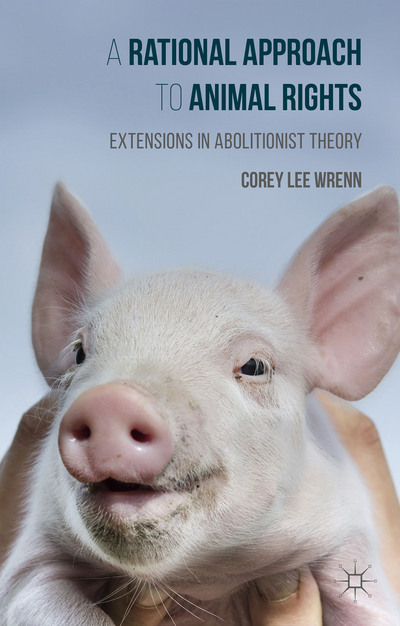
Readers can learn more about the politics of veganism in my 2016 publication, A Rational Approach to Animal Rights.
Receive research updates straight to your inbox by subscribing to my newsletter.
